Perfection Invests in Part Cleanliness for the Future
Automotive Cleanliness Standards: Meeting ISO 16232:2018
Modern vehicles are no longer merely a means of transportation; they are sophisticated, interconnected safety systems—many with autonomous-driving capabilities—that must protect occupants while delivering a seamless, luxurious experience. To achieve this reliability, the electronic modules and sub-components embedded throughout every vehicle must remain exceptionally clean. Even microscopic contaminants can cause electrical shorts or premature failures, so a zero-defect mindset is rapidly becoming the industry baseline, particularly for hybrid, electric, and self-driving platforms.
Industry Standards That Define “Clean” - ISO 16232:2018
ISO 16232:2018 defines critical limits:
ISO 16232:2018 specifies the allowable quantity, size, and nature of particulate contamination on automotive components
- Gravimetric (Qualitative) Requirements – Maximum permissible mass of total contaminants (mg/component),
determined by gravimetric analysis. - Particle (Quantitative) Limits – Maximum permissible count and size distribution of both metallic and non-metallic
particles.
These criteria have become the de facto “new norm” demanded by OEMs and Tier 1 suppliers for electronics, fuel systems, transmissions, braking, and other sensitive sub-assemblies.
Cleanliness at Perfection Spring & Stamping Corp.
Advanced Cleaning Capabilities
To support escalating cleanliness expectations, Perfection Spring & Stamping (PSS) has invested in a next-generation
Ultra Clean System engineered specifically to satisfy ISO 16232:2018 for automotive, medical, and other high-reliability applications. Key features include:
- Three-stage aqueous spray process with carefully balanced temperature, pressure, and chemistry.
- Multiple micro-filtration stages to ensure no cross-contamination between baths.
- Non-recirculating final rinse using de-ionized water for absolute purity.
- Turbo-velocity air-knife drying for particle-free, water-spot-free parts.
ISO 16232 allows four approved cleaning methods—shaking, ultrasonic, spraying, and flushing. PSS currently employs controlled high-pressure spraying because it delivers consistent, repeatable results across complex geometries while maintaining throughput.
State-of-the-Art Cleanliness Verification
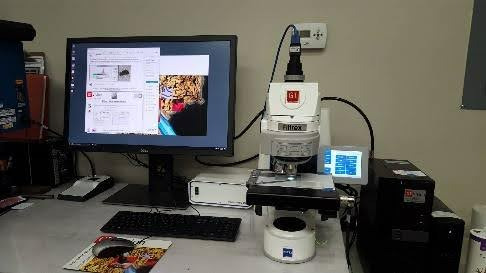
Clean parts are only as good as the measurement system that certifies them. PSS therefore complements its wash line with a GT-Vision Filtrex® analytical platform, enabling:
- Gravimetric analysis for total contaminant mass.
- Automated optical particle analysis for metallic vs. non-metallic counts, size distribution, and fiber identification.
- Customizable reporting to meet both ISO 16232:2018 tables and any customer-specific thresholds.
This closed-loop approach—cleaning, verifying, and continuously refining—provides rapid feedback during new program launches and ongoing production, ensuring each part that leaves our facility meets or exceeds the most stringent industry requirements.
Commitment to Continuous Improvement
As vehicles evolve, so will cleanliness specifications. We are committed to staying ahead of those demands through ongoing investment in equipment, process engineering, and personnel training. Our customers can therefore rely on PSS not only for precision metal parts, but for contamination-controlled components that safeguard the performance of the world’s most advanced vehicles.
For more information on our Ultra Clean capabilities or to discuss your application’s specific cleanliness targets, please contact our technical team.
Need a custom solution?
If you are looking for cost reduction through design innovation, challenge us!