Automotive Electronic Enclosure, Electromechanical Spring & Stamping Manufacturer
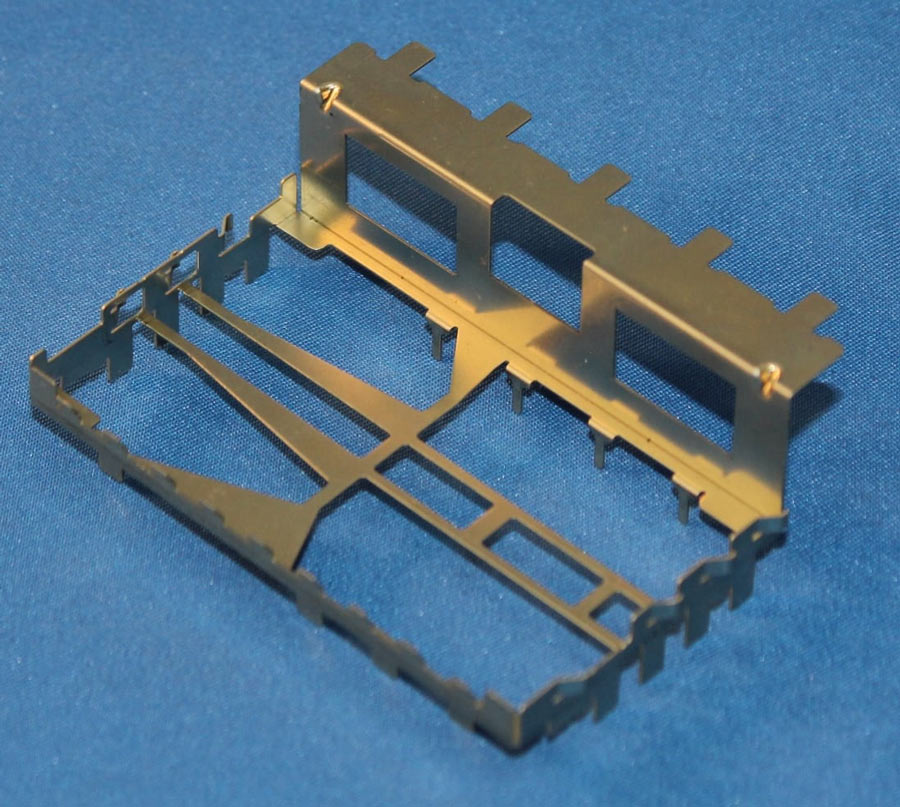
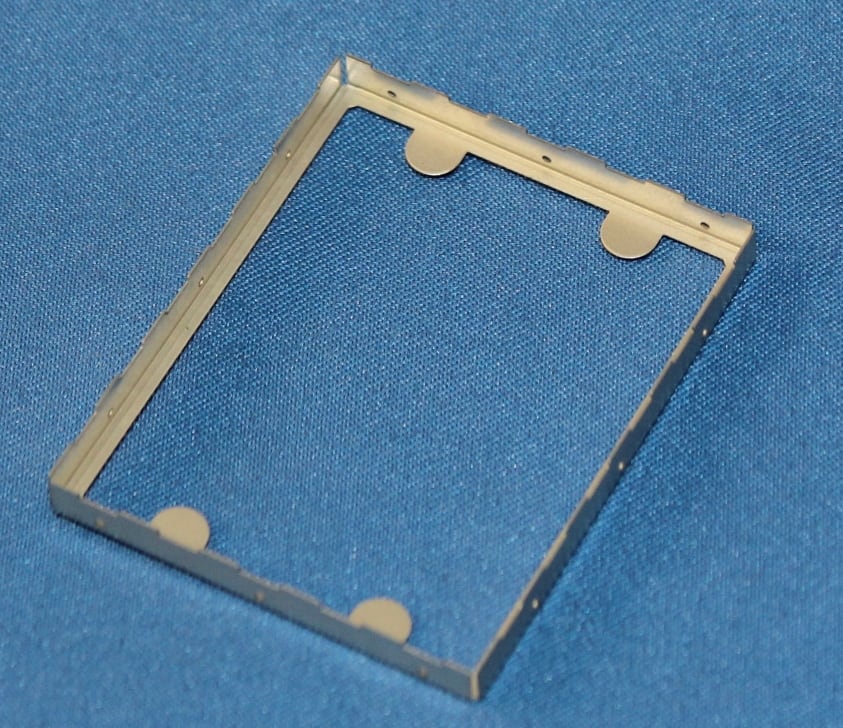
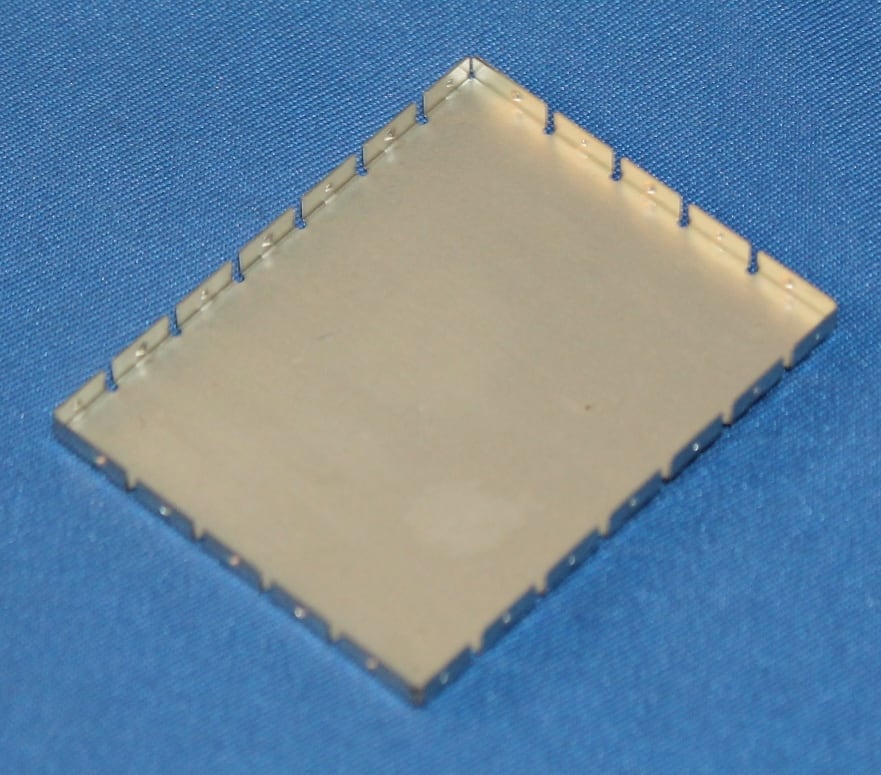
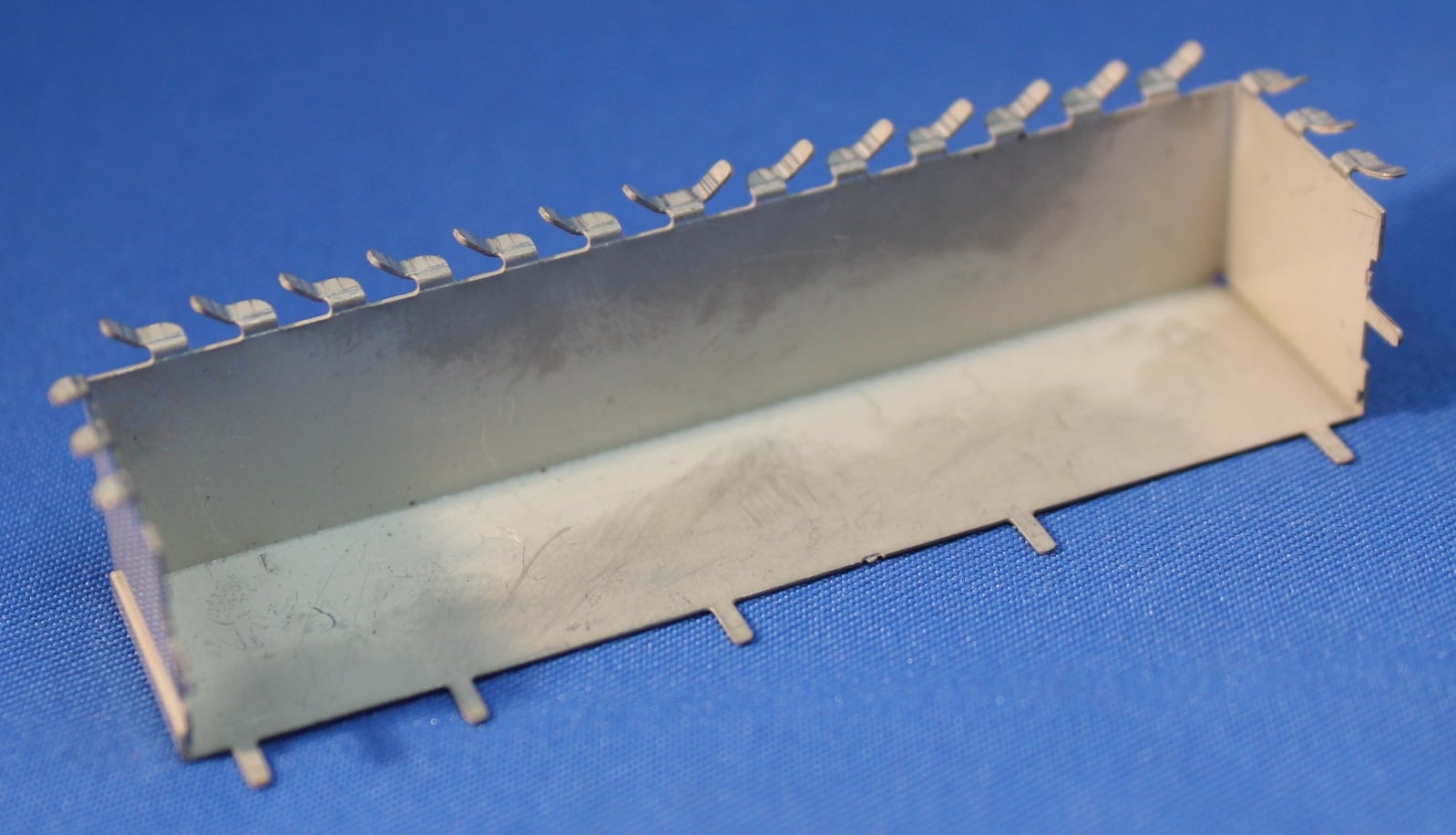
Perfection Spring & Stamping Corp. has been producing precision stamped components and springs for automotive electronics programs since the early days of electronic control module adoption in the automotive industry. Our automotive electronics stamping work covers enclosures and housings for control modules, EMI and RFI shields, stamped heat sinks, and the spring finger contacts used for grounding, shielding continuity, and antenna connections within those assemblies. Beyond the enclosure and shield work, we produce precision springs that appear throughout automotive electronic assemblies, including contact springs, retention springs, connector springs, and flat springs that work alongside our stamped components within the same program. Tier 1 suppliers and OEM engineering teams across more than twenty-five automobile brands have depended on our components for programs at Mercedes-Benz, Toyota, Honda, Subaru, General Motors, FCA, and Volkswagen, among others.
What separates our work in this space from general stamping suppliers is the depth of process investment we have made specifically for automotive electronics. Automotive electronic components carry cleanliness, dimensional, and sealing demands that go well beyond what standard stamping operations handle. We addressed each through dedicated equipment and tooling development, and the capabilities that came out of that work are built into every electromechanical enclosure stamping and spring program we run.
Our operation is built to run at volume, producing automotive electronic stampings and spring components at quantities from 100,000 parts to programs that exceed 3 million pieces per year without compromising the dimensional consistency your assemblies require.

Process Capabilities Built for Automotive Electronic Components
The requirements that automotive electronics programs place on a stamping supplier go well beyond what most production environments are set up to handle. Circuit board mounting surfaces require a level of flatness that standard material handling does not deliver consistently. Enclosure edges that contact circuit board components have to be formed and coined to eliminate burrs that would otherwise cause shorts. Sealed enclosures that operate in corrosive environments cannot have material thinning in the formed areas that would create leak paths over the vehicle's service life. We addressed each of these requirements through dedicated equipment and tooling development rather than workarounds.
Our raw material straighteners were custom designed to deliver the flatness that sensitive circuit board mounting demands before material enters the forming process. Our Class A tooling incorporates part coining and edge control that eliminates burrs at the geometry features most likely to contact board components. We conducted extensive research and development over multiple years to understand and control material flow during forming, specifically to prevent thinning at the locations in a sealed enclosure where leak paths are most likely to develop.
For cleanliness, we operate custom-built in-house wash equipment capable of cleaning components to ISO 16232:2018 automotive cleanliness standards, and we incorporate that step directly into the production sequence. In 2019 we added a foam gasket application workcell that applies an integrated sealing gasket to enclosures before they ship, eliminating that step from your assembly process.
Automotive Electronic Components and Springs We Produce
Our automotive electronics stamping and spring work spans four product categories, each of which has its own engineering requirements and serves a different function within the vehicle's electronic architecture. The pages below cover each category in detail.
Automotive ECU, ECM, and PCM Enclosures and Housings
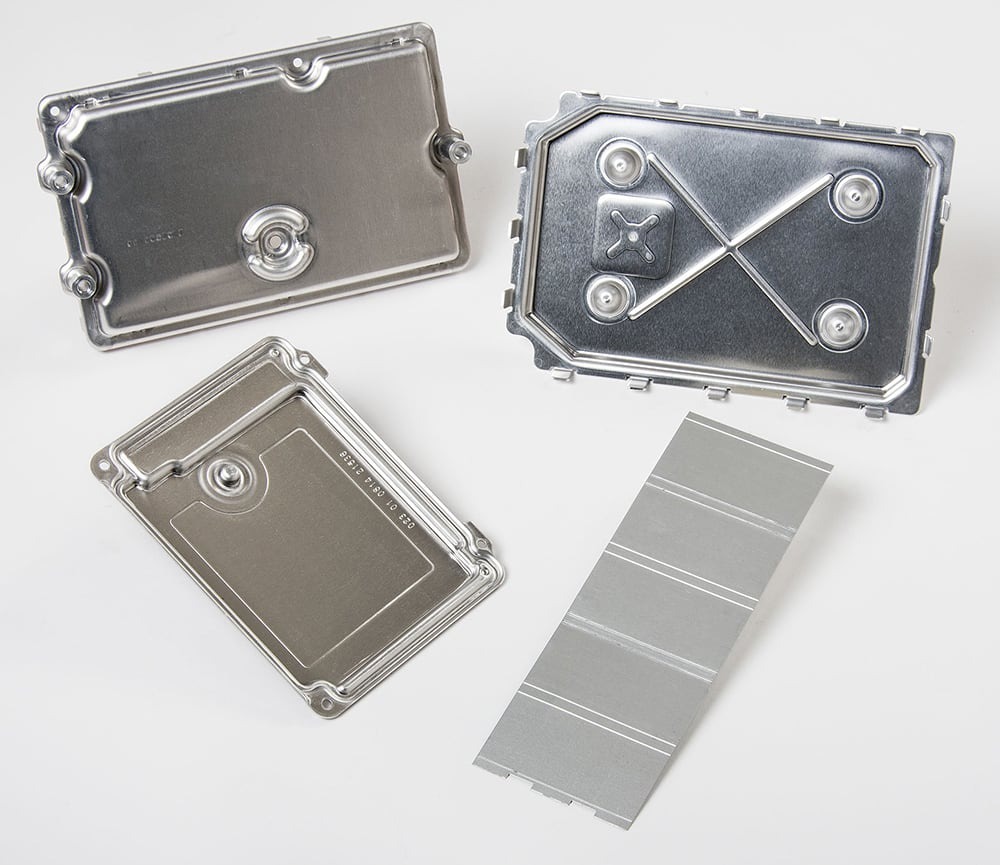
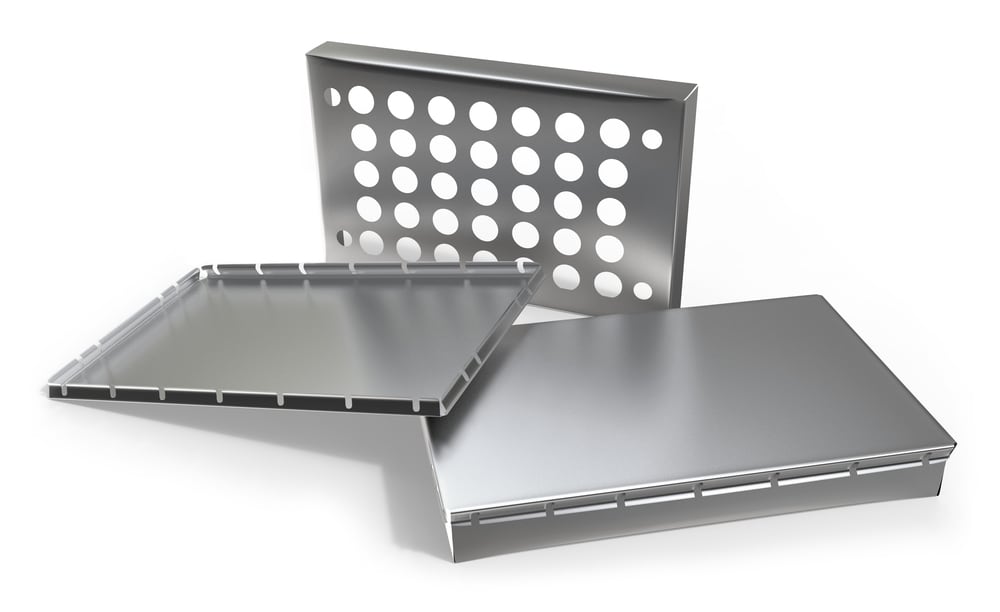
We produce stamped enclosures and housings for engine control units, engine control modules, powertrain control modules, and other sealed automotive electronic control assemblies. Our history in this category includes developing the first stamped aluminum ECU housing used to replace former diecast versions in the automotive industry, a project that required solving material flow, sealing, flatness, and edge control challenges that no stamping supplier had addressed before. We produce these enclosures in steel, aluminum, stainless steel, and electro-galvanized stock depending on the program's structural, thermal, and corrosion requirements.
Automotive EMI and RFI Shield Stamping and Spring Finger Contacts
We produce stamped EMI and RFI shields for automotive control modules, ADAS systems, and powertrain electronics, along with the spring finger contacts that maintain grounding continuity, shielding integrity, and antenna connections within those assemblies. Spring finger contacts are not a separate product at PSS. They are part of the complete shielding solution we deliver, produced and supplied alongside the stamped shield components they work with.
Learn more about our Automotive EMI and RFI Shield Stamping and Spring Finger Contacts.
Automotive Heat Sink Stamping
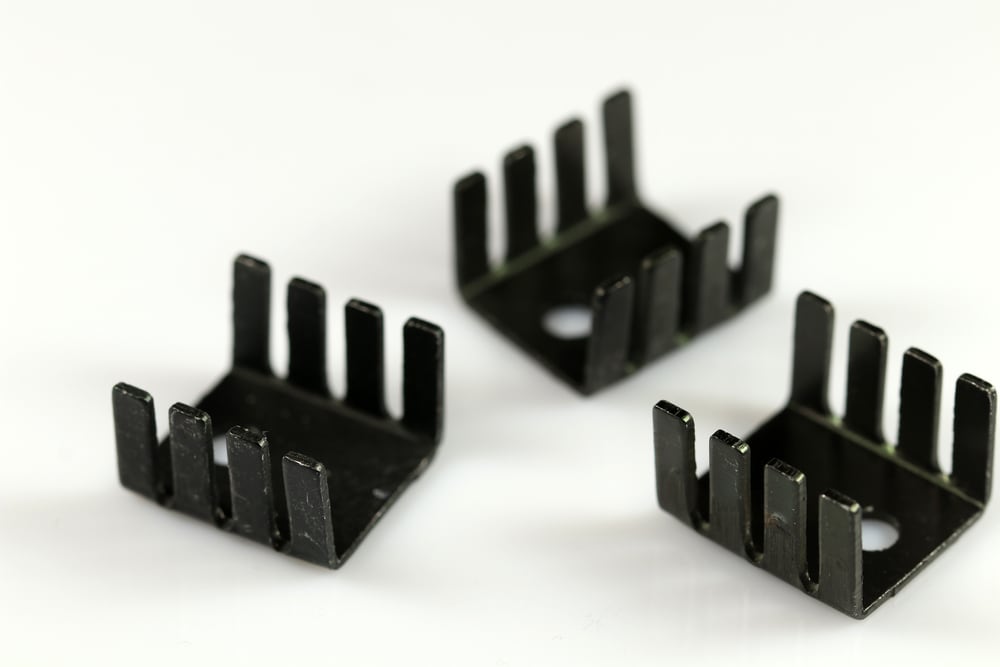
We produce stamped aluminum heat sinks for automotive electronic modules that require active thermal management within the vehicle's operating environment. Automotive control modules, onboard chargers, and ADAS processors generate heat that has to be dissipated reliably across the vehicle's service life. Our stamped heat sink work draws on the same aluminum forming and flatness control capabilities we apply across all of our automotive electronics stamping programs.
Precision Springs for Automotive Electronic Assemblies
Automotive electronic assemblies use precision springs throughout their internal architecture for functions that stamped components alone cannot perform. Connector retention springs maintain the mating force between connectors within control module assemblies across the thermal cycling and vibration the vehicle generates in service. Contact springs within sensor housings and connector bodies maintain a reliable electrical interface at low-voltage signal connections where contact resistance directly affects signal accuracy. Compression springs are used in switch and actuator assemblies within electronic modules to provide consistent return force across the component's operating cycle count. We produce compression springs, extension springs, torsion springs, and flat springs for automotive electronic programs, manufacturing to the load, deflection, and material specifications your engineers define. For programs where we are already supplying the stamped enclosure or shield components, we can supply the springs that work inside those assemblies under the same purchase order, reducing the number of suppliers your program depends on for a complete component set.
What to Expect When Working With Us on an Automotive Electronics Program
Automotive electronics programs move on compressed timelines and carry quality requirements that leave little room for supplier issues to resolve themselves during production. Our engineers engage at the design stage, which means we are reviewing part geometry, material selection, forming feasibility, and cleanliness requirements before tooling is committed, rather than discovering problems after the first article. We design and build tooling in-house for both our stamping and spring programs, which gives us direct control over tooling quality and timing without dependence on an outside shop's schedule.
We have served on Early Supplier Involvement teams and Automotive Supplier Councils with our customers, and that work has extended to co-patented product designs developed in direct collaboration with OEM and Tier 1 engineering groups. Our production volumes for automotive electronics programs run from 100,000 parts to programs that exceed 3 million pieces per year, and our process controls are built to hold dimensional consistency across that range without degradation over the production lifecycle.
One of the practical advantages of working with a supplier that produces both stampings and springs is the ability to consolidate multiple component types within a single program. If your automotive electronics assembly requires a stamped enclosure, an EMI shield, a heat sink, and the springs that work alongside those components, we can quote and supply all of them rather than requiring your team to manage separate supplier relationships for each part type. If your program has ISO 16232 cleanliness requirements, sealing requirements, enclosure-level specifications, or spring component sourcing that your current supplier has not been able to meet consistently, that is exactly the kind of program we are set up to support.
Discuss Your Automotive Electronics Stamping & Spring Requirements With Our Engineering Team
Your automotive electronics program requires a stamping and spring supplier with the tooling precision, cleanliness capability, and production discipline that automotive OEM and Tier 1 standards demand. Contact Perfection Spring & Stamping Corp. to review your enclosure, shield, heat sink, spring, or spring finger contact requirements and find out what we can do for your program.
Need a custom solution?
If you are looking for cost reduction through design innovation, challenge us!
Frequently Asked Questions
The most useful starting point is a part drawing with dimensional tolerances, material specification, sealing requirements, and annual volume estimate. For enclosures with specific cleanliness requirements, include the cleanliness class or reference standard your program requires. If your program requires a foam gasket, note the gasket material specification and the sealing surface geometry. If a finalized drawing is not available, we can work from a concept sketch or a sample part from an existing supplier to provide a preliminary assessment and engage on design for manufacturability before tooling is committed.
Yes. Spring finger contacts at PSS are part of our EMI shielding solution rather than a separate product line. We produce both the stamped shield components and the spring finger contacts that maintain grounding continuity, shielding integrity, and antenna connections within the assembly. Sourcing both from a single supplier means the contact geometry and force specifications are developed alongside the shield design rather than coordinated between two separate vendors after the fact, which reduces the risk of interface problems during program launch.
Perfection Spring & Stamping Corp. is IATF 16949:2016 certified. IATF 16949 is the automotive-specific quality management standard that builds on ISO 9001 and adds requirements for advanced product quality planning, production part approval process, and measurement system analysis. For programs that carry ISO 16232 cleanliness requirements, we operate in-house wash equipment capable of cleaning components to ISO 16232:2018 standards, with cleanliness documentation available as part of the production control plan. If your supplier qualification process requires specific certification documentation or quality system evidence beyond standard practice, discuss those requirements during the quoting process so we can confirm coverage before the program begins.
Yes. Because we manufacture both precision stampings and springs under the same roof, a program that requires a stamped enclosure, an EMI shield, a heat sink, and the spring components that work inside those assemblies can source all of them from a single supplier. Our engineers review all component requirements together at the design stage, which means interface geometry, material compatibility, and cleanliness requirements are evaluated across the full assembly rather than part by part. This reduces the number of purchase orders your supply chain team manages, simplifies incoming inspection, and removes the coordination burden that comes with managing separate vendor relationships for parts that are physically dependent on each other.
Explore Other Industries We Serve
From automotive to construction, Medical to HVAC, and more
Perfection Spring & Stamping Corp. is a manufacturer of custom metal components, serving a wide variety of industries. Ranging from "Global Fortune 1000" companies to the individual with a patent on a single-part, we serve a diverse portfolio of customers, markets & industries around the globe.