Automotive EMI Shielding & Spring Finger Contact Manufacturer
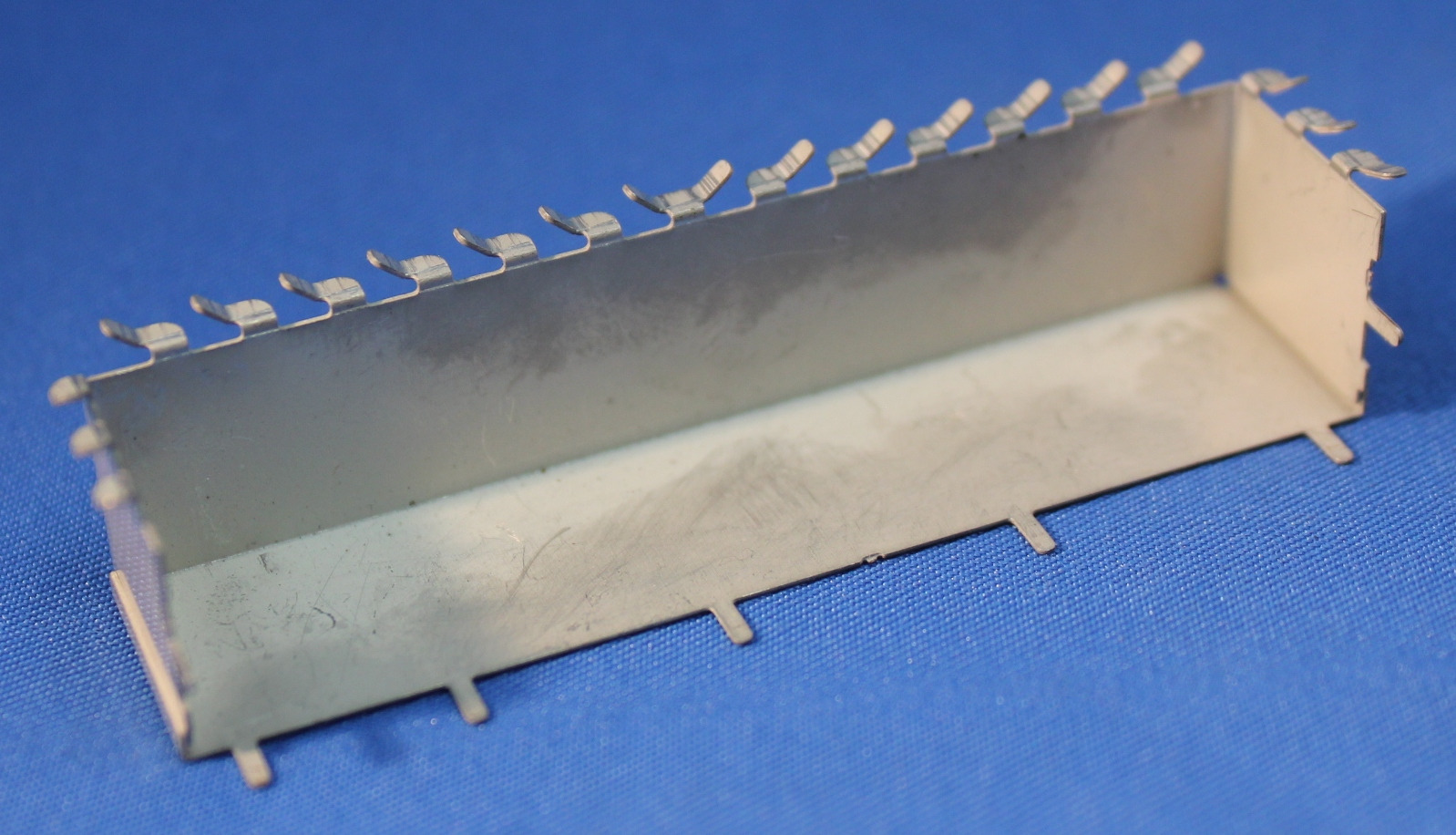
Perfection Spring & Stamping Corp. produces stamped EMI and RFI shields for automotive electronic assemblies alongside the spring finger contacts that maintain grounding continuity, shielding integrity, antenna connections, and PCB-level electrical interfaces within those same assemblies. We treat these as a single solution rather than two separate products because that is how they function in service. An EMI shield that is not properly grounded through consistent spring finger contact force does not perform to its design specification regardless of how well the stamped shield itself is made. We produce both components, develop them together at the design stage, and supply them under the same program.
Our automotive EMI shield stamping work covers control modules, ADAS systems, powertrain electronics, and infotainment assemblies across Tier 1 and OEM programs at Mercedes-Benz, Toyota, Honda, Subaru, General Motors, FCA, and Volkswagen, among others. Production volumes run from 100,000 parts to programs that exceed 3 million pieces per year without compromising the dimensional consistency and contact force repeatability those programs require.

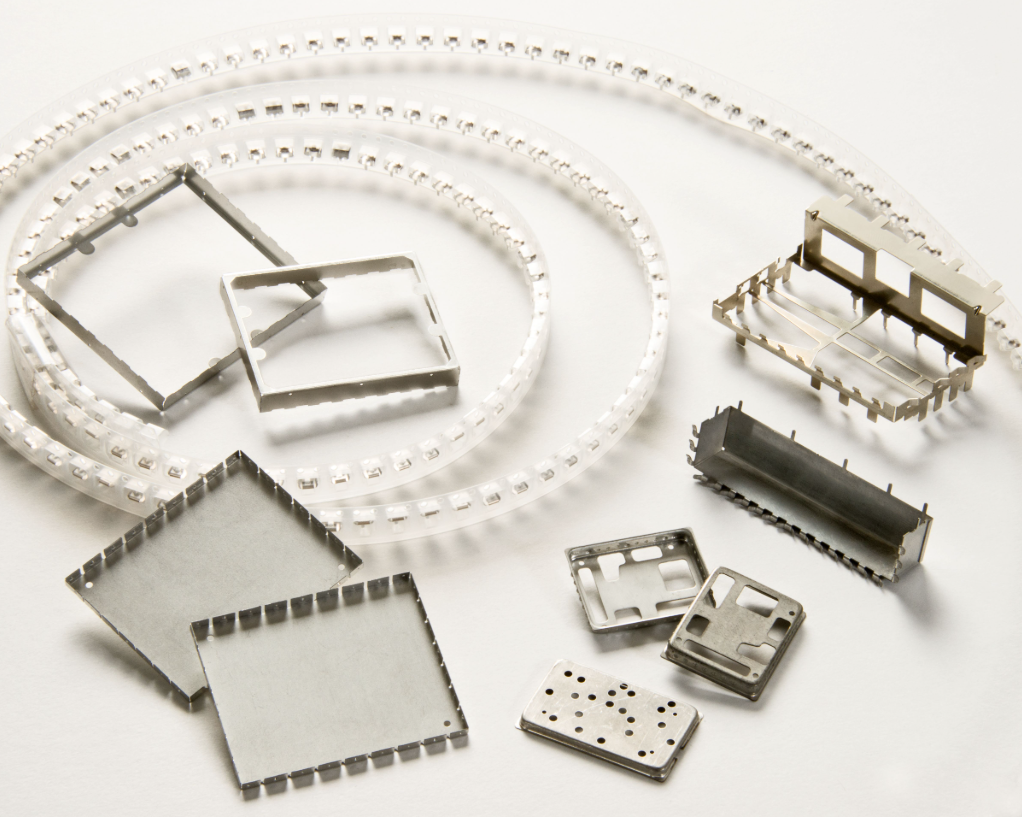
Stamped EMI and RFI Shields for Automotive Electronic Modules
Automotive electronic modules generate electromagnetic interference that can disrupt adjacent systems within the vehicle if it is not contained. Conversely, those same modules are sensitive to external electromagnetic interference from sources including ignition systems, electric motors, external RF environments, and nearby high-voltage systems. A stamped EMI shield addresses both directions. It contains emissions from the module and protects it from external interference, and its effectiveness depends on how completely it encloses the protected circuit area and how reliably it maintains electrical continuity with the ground plane at the contact interface.
We produce stamped EMI shields and RFI shields in steel, stainless steel, aluminum, and electro-galvanized stock depending on the shielding effectiveness requirements, the operating environment, the packaging constraints, and the cleanliness specification of the specific assembly. Our tooling is designed to hold the dimensional accuracy that shield fit and contact geometry require across extended production runs. For programs where the shield is part of a sealed or semi-sealed enclosure, our foam gasket application workcell can apply an integrated sealing gasket to the shield assembly before it ships, and our in-house wash equipment meets ISO 16232:2018 automotive cleanliness standards for programs that require documentation of particulate contamination levels.
Spring Finger Contacts for Automotive EMI Shielding, Grounding, and Antenna Connections
Spring finger contacts are the interface between the stamped EMI shield and the ground plane it connects to. They maintain the contact force that keeps the electrical connection reliable across the thermal cycling, vibration, mechanical load, and contact deflection that vehicle operation places on the assembly over its service life. A spring finger contact that loses tension or delivers inconsistent contact force creates a gap in the shielding circuit that degrades electromagnetic containment and allows interference to pass through the interface. We produce spring finger contacts to the force, deflection, surface finish, and plating specifications that the shielding and grounding requirements of your program demand.
Spring Finger Contacts for EMI Shield Grounding Continuity
The grounding function of an EMI shield depends on a consistent low-impedance electrical path between the shield and the vehicle ground plane. Spring finger contacts establish and maintain that path at the interface between the shield edge and the PCB ground trace or chassis ground point. Contact force consistency across a production lot is a direct factor in shielding effectiveness, because variation in contact force between units means variation in contact impedance, which affects how much interference passes through the grounding interface. We produce spring finger contacts for EMI shield grounding to the force specifications that your shielding design requires, using copper alloys and surface treatments selected for the current level and environmental exposure the contact will see in service.
PCB Spring Contacts for Signal Integrity and Board-Level Connections
Beyond the shield grounding function, spring contacts appear at board-level interfaces within automotive electronic assemblies where a reliable, repeatable contact force is required between a PCB pad and an adjacent component or housing surface. A PCB spring contact that delivers inconsistent force across a production lot introduces variation in contact resistance at those interfaces, which affects signal integrity in low-voltage sensing and control circuits. We produce PCB spring contacts and PCB grounding springs to the force and deflection specifications that board-level interface requirements define, with material and plating specifications selected based on the current level, the contact resistance budget, the cycle count, and the operating temperature range the interface is rated for.
Spring Finger Contacts for Automotive Antenna Connections
Antenna connections within automotive electronic assemblies depend on spring finger contacts to maintain a reliable RF interface between the antenna element and the receiver circuit across the mechanical and thermal conditions the vehicle generates in service. An antenna connection spring finger contact carries different requirements than a grounding contact. RF contact resistance, surface finish at the contact interface, and the geometry of the contact relative to the antenna element all affect signal reception quality. We produce spring finger contacts for automotive antenna connection programs to the specifications that RF interface requirements define, and we develop those specifications in the context of the stamped housing or shield assembly the contact works within.
Design and Development Engagement for EMI Shield and Spring Finger Contact Programs
EMI shielding effectiveness and spring finger contact performance are determined largely by decisions made during the design phase. The most common design-phase issues we see on EMI shield and spring finger contact programs include shield geometry that leaves gaps at connector cutouts or mounting features, spring finger contact placement that does not align with the PCB ground trace, contact force specifications that do not account for assembly deflection, and material selections that are incompatible with the operating environment. Each of these is straightforward to address before tooling is committed and expensive to correct after.
We engage with automotive electronics engineering teams before designs are finalized, reviewing shield geometry for coverage completeness, contact placement for ground trace alignment, spring finger contact force specifications, and material compatibility with the assembly environment. We design and build tooling in-house for both our stamped shield programs and our spring finger contact programs, which means our engineers have direct knowledge of what each tooling approach can and cannot achieve before a design is committed to production. We have served on Early Supplier Involvement teams with automotive customers, and that work has included co-patented designs developed in direct collaboration with OEM and Tier 1 engineering groups.
Work With an Automotive EMI Shielding Manufacturer That Produces the Complete Shielding Solution
Your automotive EMI shielding program requires a supplier that understands the relationship between the stamped shield and the spring finger contacts that make it work. Contact Perfection Spring & Stamping Corp. to discuss your EMI shield stamping, RFI shield, spring finger contact, or antenna connection requirements and find out what we can do for your program.
Need a custom solution?
If you are looking for cost reduction through design innovation, challenge us!
Frequently Asked Questions
The most useful starting point is a part drawing for the stamped shield with dimensional tolerances and material specification, and a spring finger contact specification that includes required contact force, deflection range, surface finish or plating requirement, and the PCB pad or ground trace geometry the contact interfaces with. If your program is still in development and a finalized spring specification is not available, contact force and deflection requirements derived from your shielding design are sufficient to begin a preliminary assessment. Annual volume estimate and any program-specific cleanliness or documentation requirements should be included in your initial submission.
Steel and stainless steel provide good shielding effectiveness across a broad frequency range and are the standard choice for automotive EMI shields where structural stiffness and corrosion resistance are primary requirements. Aluminum is used where weight reduction is a priority and where the frequency range of the interference being managed is compatible with aluminum's shielding characteristics. Electro-galvanized steel is used where the base metal needs corrosion protection without the dimensional variation that post-form coating can introduce. The material selected affects not only the shielding effectiveness of the stamped shield but also the surface finish and plating requirements for the spring finger contacts that interface with it, since contact resistance at the spring-to-shield interface is a factor in overall grounding performance.
Contact force consistency in a spring finger contact production lot is controlled through material selection, temper specification, tooling precision, and production lot testing. We specify material temper based on the target force and deflection range, and we design tooling to the dimensional tolerances that deliver consistent formed geometry across the production run. Force testing is performed on samples from each production lot to verify that the contact force distribution across the lot falls within the specified range. Variation in contact force across a lot is a direct indicator of tooling wear or material variation, and our process controls are set up to detect that variation before it reaches your assembly operation rather than after.
Yes. For programs where the EMI shield is assembled inside a sealed automotive electronic module and carries cleanliness requirements under ISO 16232, we operate in-house wash equipment capable of cleaning stamped components to ISO 16232:2018 standards. Washing is incorporated into the production sequence as a controlled process step with documentation available for your program's quality records. Spring finger contacts supplied alongside the shield can be washed to the same standard in the same production sequence where program requirements specify it.
EMI and RFI shielding address the same fundamental problem, which is unwanted electromagnetic energy either leaving or entering an electronic assembly, but the terms refer to different frequency ranges. EMI shielding is a broader term covering electromagnetic interference across a wide frequency range, including both conducted and radiated interference. RFI shielding refers specifically to radio frequency interference, which occupies the higher end of the frequency spectrum and is particularly relevant in automotive assemblies that include wireless communication modules, ADAS radar systems, antenna-connected receivers, and high-frequency powertrain electronics. In practice, a stamped shield designed for automotive RFI shielding may carry tighter requirements on seam continuity, contact geometry, and surface finish than a general EMI shield because the effectiveness of an RFI shield at high frequencies is more sensitive to small gaps or impedance discontinuities at the grounding interface.
Both approaches are workable depending on where your program is in development. If the shield design is not yet finalized, we recommend developing the spring finger contact geometry alongside the shield so that contact placement, force specification, deflection range, and surface treatment are optimized for the specific shield geometry and PCB layout rather than adapted after the fact. If you have an existing spring finger contact design from a previous program, we can evaluate whether that design is compatible with the new shield geometry and assembly sequence, and identify any modifications needed to make it work within the new program's constraints. Either way, the review happens at the design stage where changes are inexpensive rather than after tooling is committed.
Explore Other Industries We Serve
From automotive to construction, Medical to HVAC, and more
Perfection Spring & Stamping Corp. is a manufacturer of custom metal components, serving a wide variety of industries. Ranging from "Global Fortune 1000" companies to the individual with a patent on a single-part, we serve a diverse portfolio of customers, markets & industries around the globe.